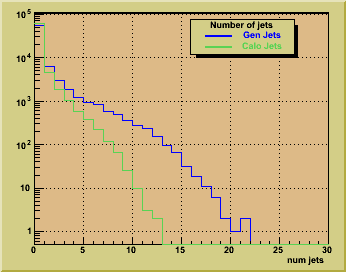
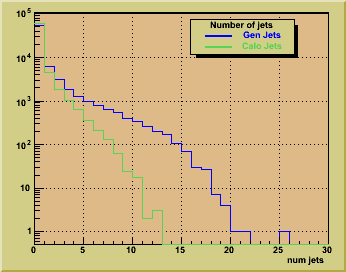
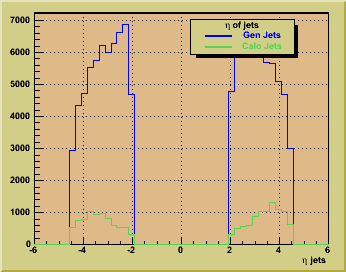
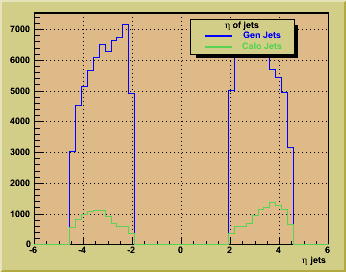
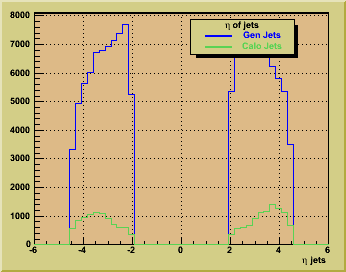
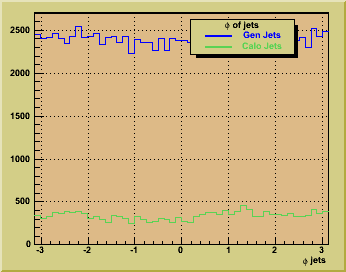
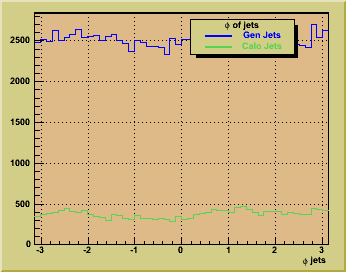
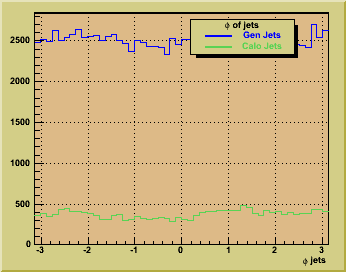
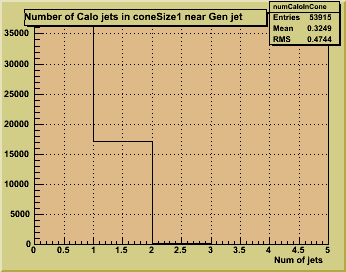
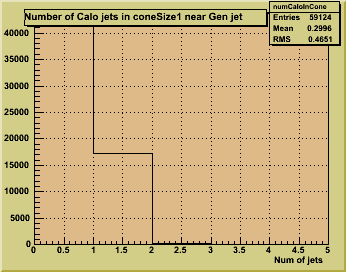
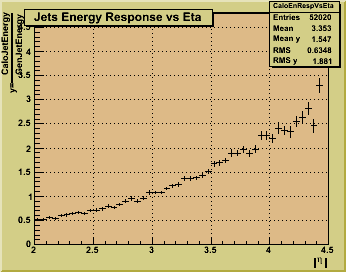
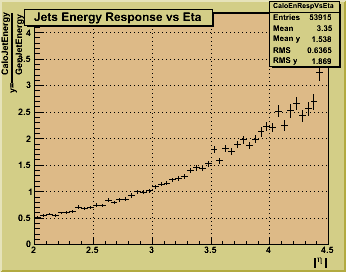
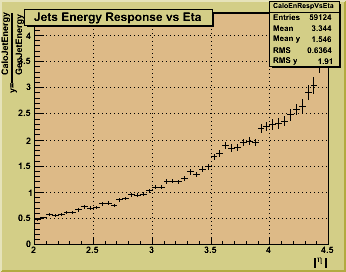
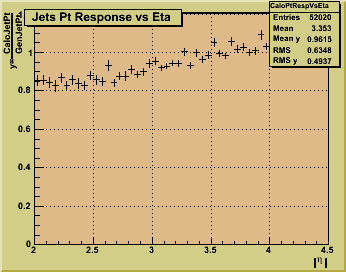
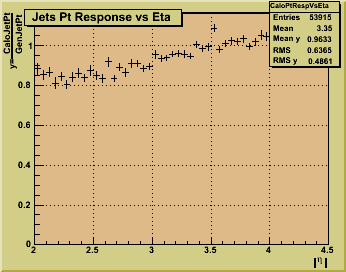
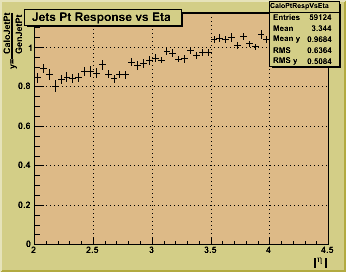
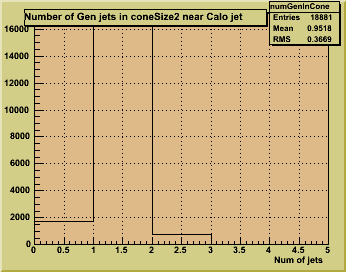
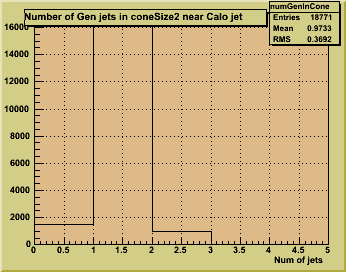
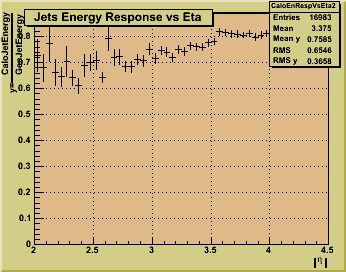
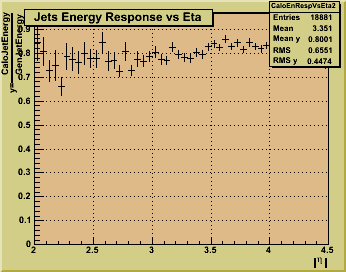
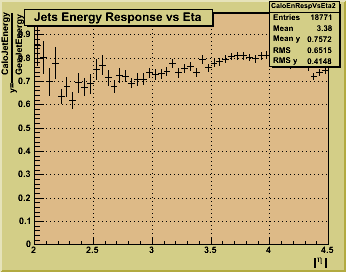
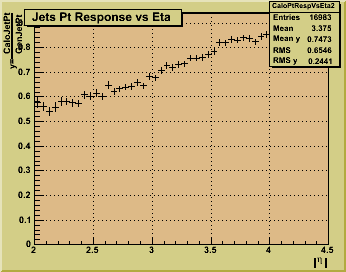
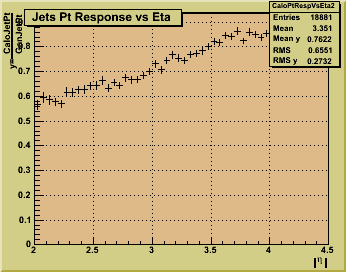
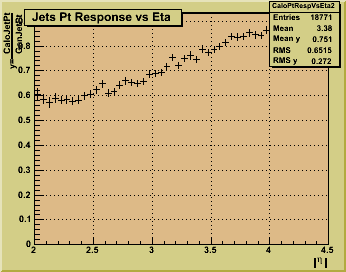
In the CMS experiment, very forward jets can be identified using the two HF calorimeters (3<|η|<5). The HF, located 11.2 meters away
on both sides of the interaction point (IP), is a steel plus quartz-fiber Cherenkov calorimeter segmented into 1200 towers of
Δη×Δφ∼0.175×0.175. It has an interaction length of 10.3λ and is sensitive to deposited
electromagnetic (EM) and hadronic (HAD) energy. The two HFs have been specifically designed for forward jet and missing-energy
measurements. In particular, the HF plays a prominent role in forward jet tagging for the vector-boson-fusion (VBF, qq→ qqH) Higgs
production channel. The HFs have an energy (position) resolution of ∼20%(∼10%) for typical jets with E
T ∼ 40 GeV
(i.e. E = E
Tcoshη ≈ 1 TeV at η=4).
Events for this analysis can be selected online with a L1 trigger requirement of a jet candidate
with a transverse energy threshold of ET≈10 GeV since the default CMS jet L1 algorithm includes
as primitives the 2×72 trigger towers in HF+/- (each tower has an η−φ segmentation
of about 0.5×0.35). In addition, an HLT trigger currently exists (although with a higher ET =
30 GeV threshold) for the fast jet reconstruction and tagging of forward-backward jets in HF
emitted in the Higgs VBF channel.
-- new regions in Q-x plot
-- test resolution of HF calorimeter
Material about "Low-x QCD physics" can be found in
CMS Note-2007/002
and article
Forward Physics at the LHC
Structure functions on PDG